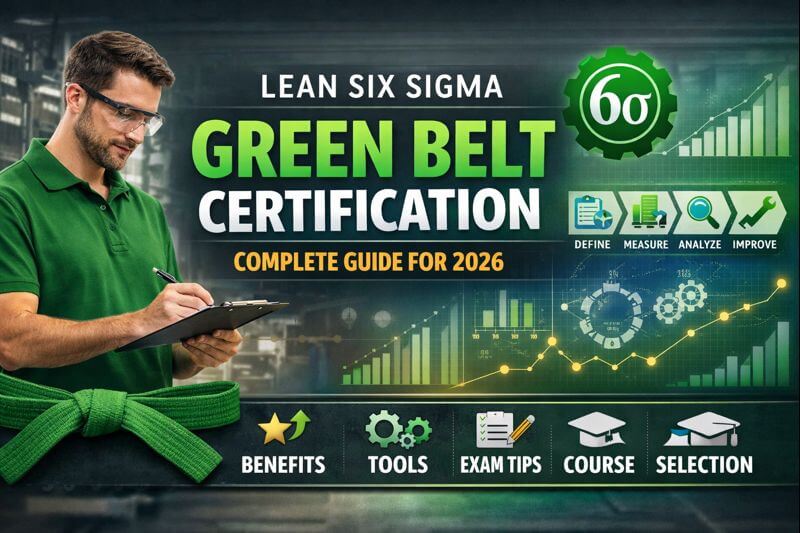
Lean Six Sigma Green Belt Certification - Complete Guide for 2026
Process improvement is no longer a “nice-to-have” skill. In 2026, companies expect professionals to solve real business problems, reduce waste, and improve performance with data. That’s exactly where Lean Six Sigma Green Belt certification fits in.
This guide explains what Green Belt certification is, why it matters, how to prepare for it, and how to choose the right course without jargon, hype, or confusion.
Whether you’re a working professional, quality manager, operations leader, or aspiring process excellence expert, this guide is written for you.
What Is Lean Six Sigma Green Belt Certification?
Lean Six Sigma Green Belt certification validates your ability to lead small-to-mid-sized improvement projects using proven Lean and Six Sigma methodologies.
A Green Belt professional works on real business problems, such as:
Reducing process delays
Improving quality and consistency
Cutting operational costs
Enhancing customer satisfaction
Where Green Belt Fits in the Belt Structure
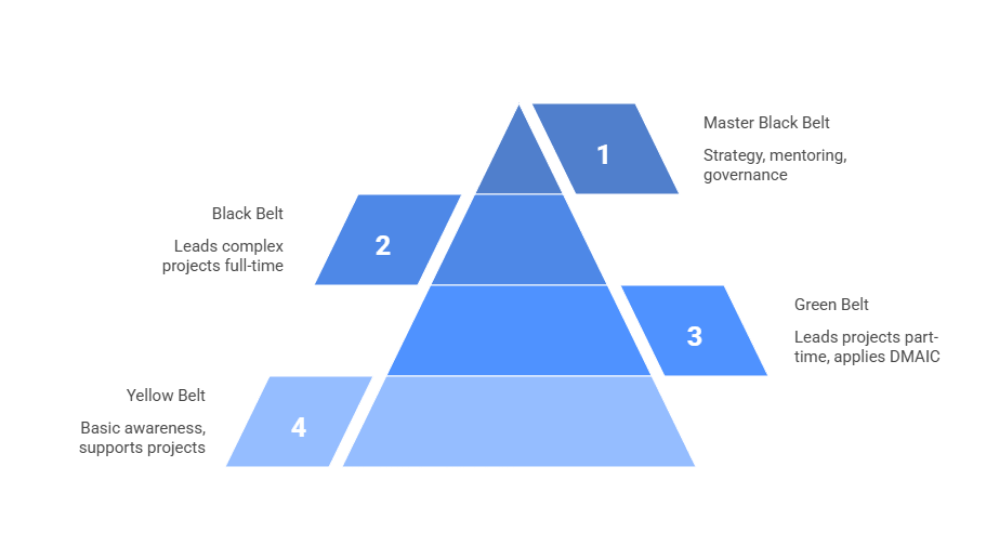
Green Belt is the most popular and practical level, because it balances depth of knowledge with real-world usability.
Why Green Belt Certification Matters in 2026
In 2026, organizations are under pressure to:
Do more with fewer resources
Use data, not opinions, to make decisions
Improve processes alongside AI and automation
Green Belt professionals help companies translate strategy into measurable improvement.
Key Benefits of Becoming Green Belt Certified
1. Strong Career Advantage
Green Belt certification is widely recognized across industries like:
Manufacturing
IT & Software
Healthcare
Banking & Finance
Logistics & Supply Chain
It strengthens your profile for roles such as:
Process Improvement Manager
Quality Manager
Operational Excellence Lead
Business Analyst
Project Manager
2. Practical, Job-Ready Skills
You don’t just “learn theory.” You learn how to:
Identify root causes of problems
Use data to justify decisions
Improve processes step by step
Deliver measurable results
3. Higher Earning Potential
Certified professionals often earn 10–30% more than non-certified peers, especially in operations, quality, and continuous improvement roles.
4. Confidence to Lead Change
Green Belt certification gives you a structured approach to solving problems making you more confident in meetings, reviews, and leadership discussions.
Key Tools Used in Lean Six Sigma Green Belt Projects
Unlike many competitors that only list tool names, here’s how Green Belt tools are actually used in real projects.
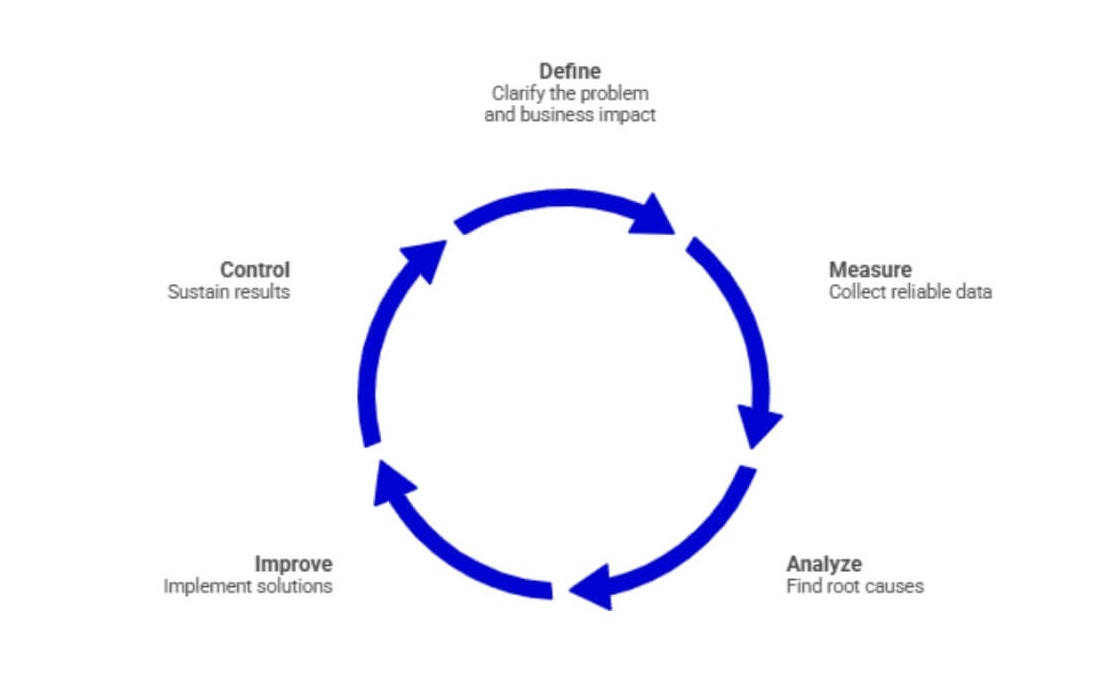
DMAIC Framework (Core of Green Belt)
Essential Green Belt Tools You’ll Use
Problem Definition & Analysis
SIPOC
Voice of Customer (VOC)
CTQ (Critical to Quality)
Process Mapping
Root Cause & Data Analysis
Pareto Analysis
Fishbone (Cause & Effect)
5 Whys
Basic Hypothesis Testing
Improvement & Control
Failure Modes and Effects Analysis (FMEA)
Control Charts
Standard Work
Visual Management
In 2026, employers value application of tools, not just tool knowledge. Good courses focus heavily on case studies and live projects.
How to Prepare for the Green Belt Exam (Step-by-Step)
Many people fail not because the exam is difficult but because they prepare the wrong way.
Step 1 - Understand the Exam Pattern
Most Green Belt exams include:
50–100 multiple-choice questions
Time-based test (2–4 hours)
Open-book or closed-book (depends on provider)
Step 2 - Focus on Concepts, Not Memorization
Instead of memorizing formulas:
Understand when and why a tool is used
Learn how DMAIC flows from one phase to another
Practice scenario-based questions
Step 3 - Practice With Real Examples
Use:
Case studies
Sample projects
Mock exams
This builds confidence and speeds up decision-making during the exam.
Step 4 - Learn Basic Data Interpretation
You don’t need advanced statistics.
You do need to:
Interpret charts
Understand variation
Read basic statistical outputs
How to Choose the Right Green Belt Course in 2026
This is where many learners make costly mistakes.
What to Look for in a Good Green Belt Course
1. Globally Recognized Curriculum
Ensure the course aligns with international Lean Six Sigma standards, not a simplified or outdated syllabus.
2. Practical Project-Based Learning
The best programs include:
Real-world case studies
Hands-on exercises
Project guidance or mentoring
3. Experienced Trainers
Choose instructors with:
Industry experience
Real project exposure
Ability to explain concepts simply
4. Flexible Learning Options
In 2026, professionals prefer:
Live online sessions
Self-paced modules
Recorded classes for revision
5. Exam & Certification Support
Check for:
Exam preparation
Practice tests
Certification guidance
Avoid courses that focus only on theory or promise “certification in 2 days” with no depth.
Who Should Do Lean Six Sigma Green Belt Certification?
Green Belt certification is ideal for:
Working professionals
Quality & process managers
Operations & supply chain professionals
IT & service industry employees
Engineers and analysts
Anyone involved in process improvement
No advanced math background is required just willingness to learn and apply.
Frequently Asked Questions
Yes. With data-driven decision-making becoming essential, Green Belt skills remain highly relevant across industries.
Basic work experience helps, but many courses are beginner-friendly and guide you step by step.
Typically 1week, depending on learning format and project requirements.
It’s manageable with the right training. The focus is on understanding and applying concepts, not complex mathematics.
Absolutely. Green Belt is widely used in IT, healthcare, banking, HR, and service industries.
Final Thoughts - Is Green Belt Certification Right for You?
Lean Six Sigma Green Belt certification is not just a credential it’s a career skill.
In 2026, organizations want professionals who can:
Think logically
Use data confidently
Improve processes continuously
Deliver measurable results
If you want to stand out, grow faster, and contribute real value to your organization, Green Belt certification is a smart investment.