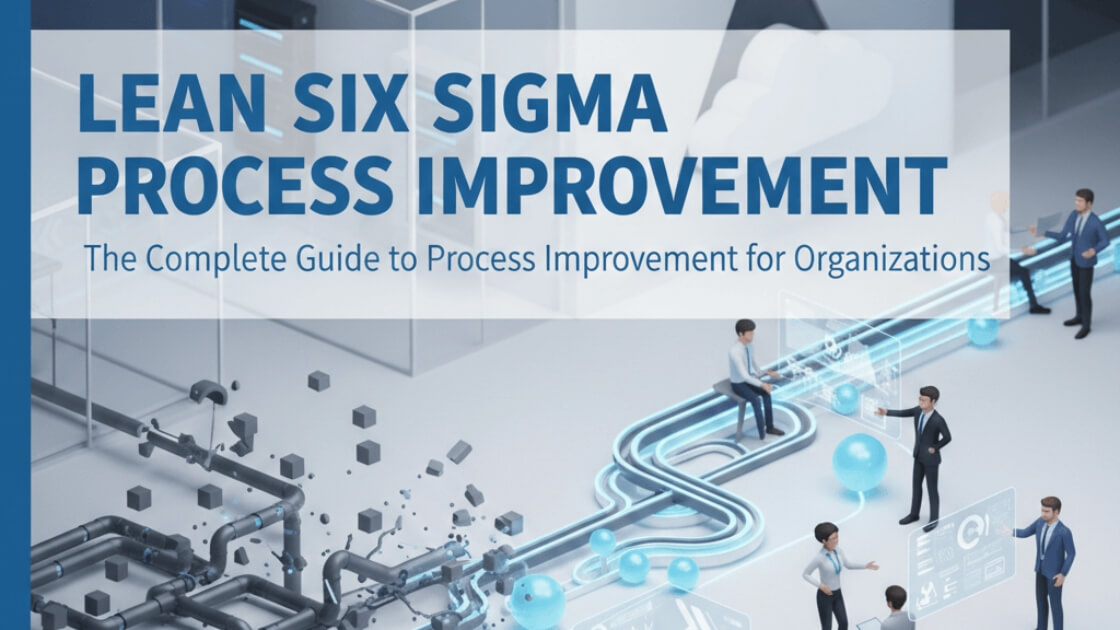
Lean Six Sigma Process Improvement: The Complete Guide to Process Improvement for Organizations
Every organization wants smoother operations, lower costs, and better customer satisfaction. Yet, most businesses struggle with delays, rework, errors, and inconsistent outcomes. These problems usually don’t come from people not working hard they come from poorly designed processes.
Lean Six Sigma is a proven approach that helps organizations fix these problems at the root level. Instead of quick fixes, it focuses on building strong, efficient, and predictable processes that deliver consistent results over time.
This guide explains Lean Six Sigma in a clear, practical way, with real-world context, so you can understand how it actually works inside organizations.
Lean Six Sigma is a structured process improvement methodology that combines two powerful approaches: Lean and Six Sigma.
Lean focuses on eliminating waste activities that consume time, money, or effort but do not add value from the customer’s point of view. Six Sigma focuses on reducing variation and defects so processes perform consistently and accurately.
When combined, Lean Six Sigma helps organizations deliver work faster while maintaining high quality. It ensures that processes are not only efficient but also reliable and predictable.
In simple terms, Lean Six Sigma helps organizations do the right work, in the right way, with minimal waste and minimal errors
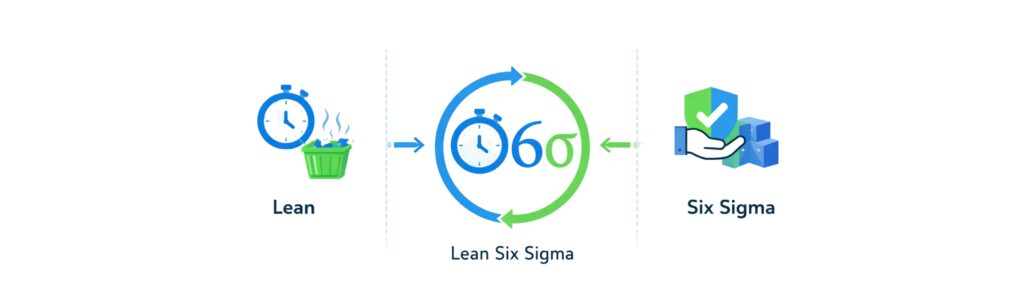
Lean vs Six Sigma - Understanding the Difference and the Combination
What Lean Focuses On
Lean is primarily concerned with flow and speed. It asks whether each step in a process truly adds value to the customer. If a step does not add value, Lean challenges whether it can be removed, simplified, or reduced.
Lean is especially effective in identifying delays, excessive handoffs, waiting time, and unnecessary movement of information or materials.
What Six Sigma Focuses On
Six Sigma focuses on consistency and accuracy. It aims to reduce defects, errors, and variation in process outcomes. Instead of reacting to problems, Six Sigma uses data to understand why defects occur and how to prevent them from happening again.
Why Lean Six Sigma Works Better Together
Lean alone can make a process faster, but not necessarily more stable. Six Sigma alone can make a process more accurate, but sometimes slower. Lean Six Sigma combines both strengths, ensuring that processes are fast, stable, and scalable.

Core Principles Behind Lean Six Sigma
Lean Six Sigma is built on a few fundamental principles that guide every improvement effort.
First, customer value is always the starting point. Improvement begins by understanding what the customer actually cares about, not what the organization assumes is important.
Second, processes not people are usually the root cause of poor performance. Lean Six Sigma focuses on fixing systems and workflows rather than blaming individuals.
Third, decisions are based on data. Instead of relying on opinions or experience alone, Lean Six Sigma uses measurable evidence to identify problems and validate improvements.
Finally, improvement is continuous. Lean Six Sigma is not a one-time initiative but a long-term way of working.
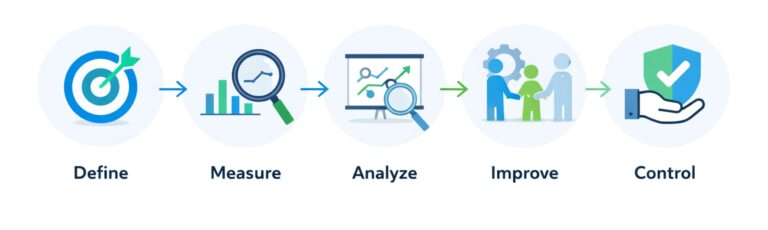
DMAIC is the most widely used problem-solving framework in Lean Six Sigma. It provides a clear structure for improving existing processes
Define - Clearly Identify the Problem
In the Define phase, the organization clearly states the problem it is trying to solve, why it matters, and how it impacts customers and the business. Goals are defined in measurable terms so success can be evaluated objectively.
For example, an organization may define a problem as delayed customer onboarding that is leading to complaints and lost revenue.
Measure - Understand Current Performance
The Measure phase focuses on understanding how the process currently performs. Data is collected to establish a baseline, and the actual flow of work is mapped.
This step often reveals gaps between how a process is supposed to work and how it actually works in reality.
Analyze - Identify Root Causes
During the Analyze phase, teams dig deeper to understand why the problem exists. Patterns, trends, and cause-and-effect relationships are examined using data.
Instead of treating symptoms, Lean Six Sigma focuses on identifying the true root causes that drive poor performance.
Improve - Implement and Test Solutions
Once root causes are identified, targeted solutions are developed and tested. Improvements are designed to eliminate waste, reduce variation, and simplify workflows.
The focus is on practical, sustainable changes rather than complex or expensive solutions.
Control - Sustain the Improvement
The Control phase ensures that improvements last. New standards, monitoring systems, and accountability mechanisms are put in place so the process does not revert to old habits.
Lean Six Sigma Tools Used in Real Organizations
Lean Six Sigma includes many tools, but successful organizations focus on using the right tools at the right time.
Process mapping helps teams visualize how work flows and where delays occur. Root cause analysis helps identify why problems keep repeating. Control charts and performance dashboards help leaders track whether improvements are sustained.
The real value of tools lies not in their complexity but in how effectively they support better decision-making.
Where Lean Six Sigma Is Applied Across Industries
Lean Six Sigma is widely used across manufacturing, healthcare, IT, banking, logistics, and service industries. In manufacturing, it reduces defects and improves cycle time. In healthcare, it improves patient flow and safety. In IT and services, it reduces rework and improves delivery reliability.
Because Lean Six Sigma focuses on processes, it can be applied wherever work flows from one step to another.
Lean Six Sigma Roles and Certification Levels
Organizations often structure Lean Six Sigma roles to build capability at different levels. White and Yellow Belts focus on awareness and support. Green Belts lead smaller improvement projects alongside their regular roles. Black Belts handle complex, cross-functional improvements. Master Black Belts provide strategic direction and coaching.
Certification is valuable when it is tied to real project results, not just classroom learning.
Common Reasons Lean Six Sigma Fails
Lean Six Sigma initiatives often fail when organizations treat them as training programs rather than business improvement efforts. Lack of leadership support, poor project selection, and ignoring change management are common pitfalls.
Success depends on aligning Lean Six Sigma projects with real business priorities and engaging people throughout the process.
How to Successfully Implement Lean Six Sigma in Your Organization
Successful implementation starts with selecting problems that matter to the business. Teams should be trained while working on live projects so learning translates directly into results.
Leadership involvement, clear communication, and visible wins help build momentum. Over time, Lean Six Sigma becomes part of the organization’s culture rather than a separate initiative.
Why Lean Six Sigma Creates Long-Term Value
Lean Six Sigma is not about working harder or cutting corners. It is about designing processes that work smoothly, consistently, and efficiently.
Organizations that adopt Lean Six Sigma build a culture of continuous improvement, make better decisions using data, and deliver greater value to customers over the long term.
If your organization wants sustainable growth, predictable performance, and operational excellence, Lean Six Sigma provides a proven path forward.
If you’re considering Lean Six Sigma for your organization, a structured roadmap and expert guidance can help you achieve results faster while avoiding common mistakes.
FAQs – Difference Between Lean and Six Sigma
Yes. In fact, small organizations often see faster results because processes are simpler and decisions are made quickly.
Most projects take between eight and sixteen weeks, depending on complexity and data availability.
Basic data analysis is sufficient for most projects. Advanced statistics are used only when necessary.
Yes. Rising costs, competition, and customer expectations make process improvement more important than ever.